Both channels are usually sold as a religion. They are actually tools with different jobs, and the order you use them in matters more than the choice.
 Marku Leone · Founder, donebyverde · South Florida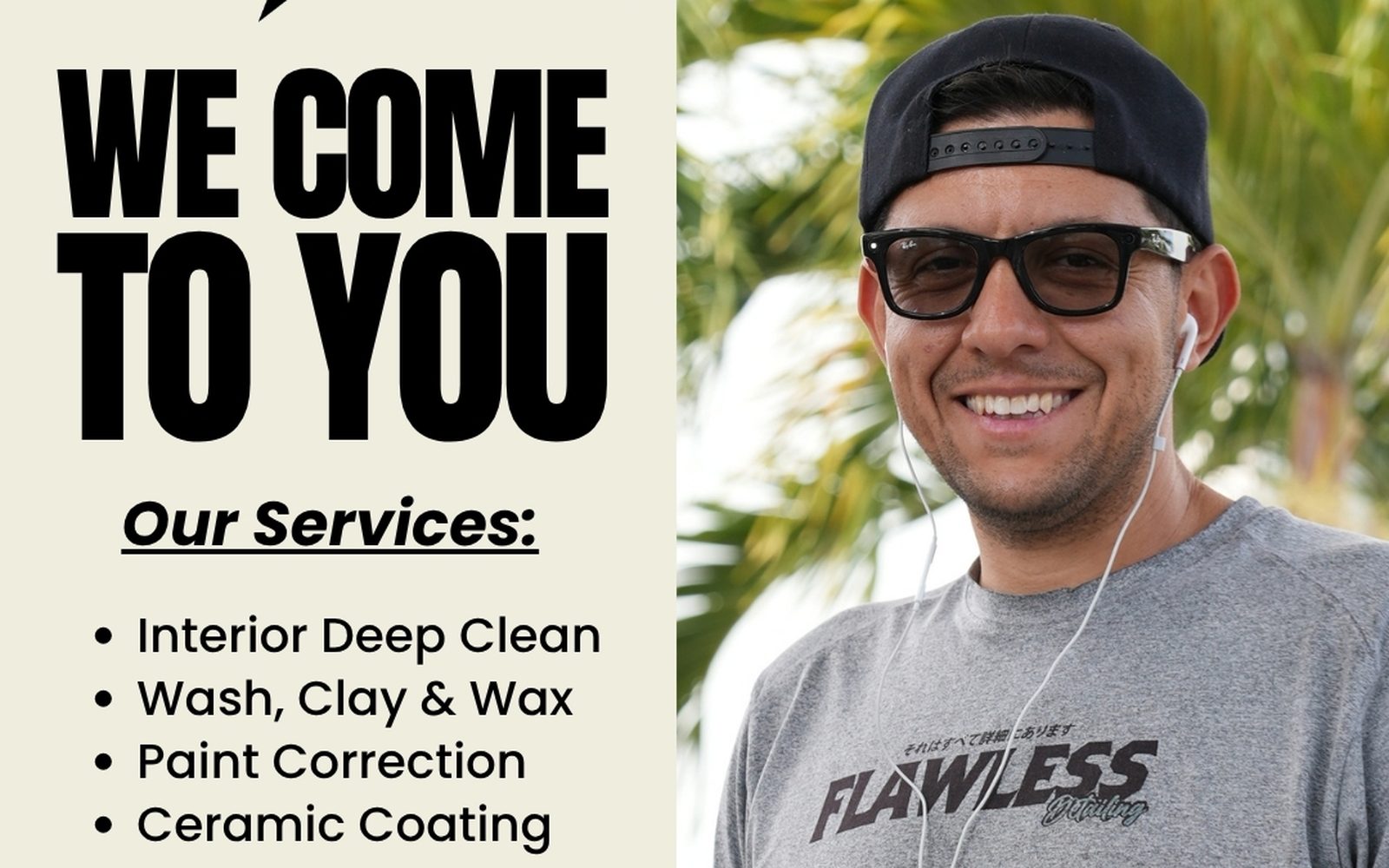
A real ad we ran for Flawless Detail Spa. The paid half of this argument.
A business with a fixed budget asks whether to spend it on search rankings or on paid traffic, and gets a confident answer from whoever they asked, determined largely by what that person sells. The honest answer starts with a different question: does the page those visitors will land on already convert anyone?
If it does not, the SEO versus ads debate is irrelevant. You are choosing between two ways of sending strangers to a page that will fail them. Ads will fail faster and more expensively, SEO will fail slower and more quietly, and in both cases the money is gone. The first investment is almost always the page, and it is the least exciting thing on the list.
You can find out cheaply. Look at whether anyone who arrives ever contacts you. Watch five session recordings. Ask three customers what nearly stopped them from getting in touch. If the answers reveal a page that does not clearly say what you do, who it is for, what it costs and what happens next, spend there first.
Paid search buys certainty and speed. You can be in front of people searching for exactly what you sell this afternoon, at a volume you control, and turn it off tomorrow. What you are really buying, in the first months, is information: which phrases produce enquiries, which landing message resonates, what a lead genuinely costs you. That information is worth more than the leads themselves, because it directs everything else.
Organic search buys compounding and margin. It is slow, usually months rather than weeks, and it is not free, it is paid for in work rather than media spend. But a page that ranks keeps producing after you stop paying, the cost per lead falls over time instead of rising, and the asset belongs to you. It also survives the thing every paid channel eventually does, which is get more expensive.
They are not substitutes. One buys speed and data, the other buys durability. Framing them as a choice is what causes the mistake.
Fix the page first, until the traffic you already have converts at a rate you would be happy to multiply.
Then run paid, deliberately and small, as a research budget. A tight campaign on the handful of phrases with obvious commercial intent, pointed at that page, run long enough to produce a meaningful number of enquiries. What you want out of it is not a positive return in month one. It is a validated list of the phrases that actually produce customers, and an honest cost per lead to plan against.
Then invest in organic against exactly those phrases. This is the step that changes the economics, because you are no longer guessing which pages are worth building. Paid told you. You are compounding into demand you have already proven converts, which is a completely different activity from publishing content and hoping.
Then keep paid running on the terms where you cannot rank, or where the economics work anyway, and let organic take over the rest. Most established service businesses land somewhere near a majority of leads from organic with paid covering the gaps and the seasonal pushes.
If your cost per click is high and your average job is small, the arithmetic may never work. Some categories have been bid into the ground by national aggregators and franchise budgets, and a local operator paying those prices is subsidising someone else's business model.
Run the numbers before the campaign, not after. Cost per click, divided by an honest expected conversion rate, gives cost per lead. Divide by your close rate for cost per customer. Compare that against gross profit on a typical job, not revenue. If it does not clear comfortably, paid is not a channel for you right now, and no amount of optimisation will change the underlying arithmetic by an order of magnitude.
If you need customers this quarter to make payroll, organic is the wrong instrument. It is a compounding asset with a lag, and treating it as an emergency measure is how businesses spend six months and a lot of money on content while the actual problem gets worse.
It is also wrong when the thing you sell is genuinely new, and nobody is searching for it yet. You cannot rank for demand that does not exist. That is a case for paid social, content that creates the category, and outbound, not for a keyword strategy.
Most businesses that ask this question are not really choosing a channel. They are hoping a channel will fix a positioning problem. When the offer is undifferentiated and the page does not make a case, both channels underperform and both agencies get blamed in turn.
Channels amplify. They do not create. If you are genuinely better at something specific, either channel will eventually work and the sequence above just gets you there faster and cheaper. If you are not, the honest first investment is not media at all, it is deciding what you are actually going to be best at.
Founder of donebyverde, a studio in South Florida. We build the site, shoot the content, and wire the follow up that answers first, for service businesses across South Florida. This article is how we actually work.
Talk it throughReal partnerships start with one strategy call.
Get It Done